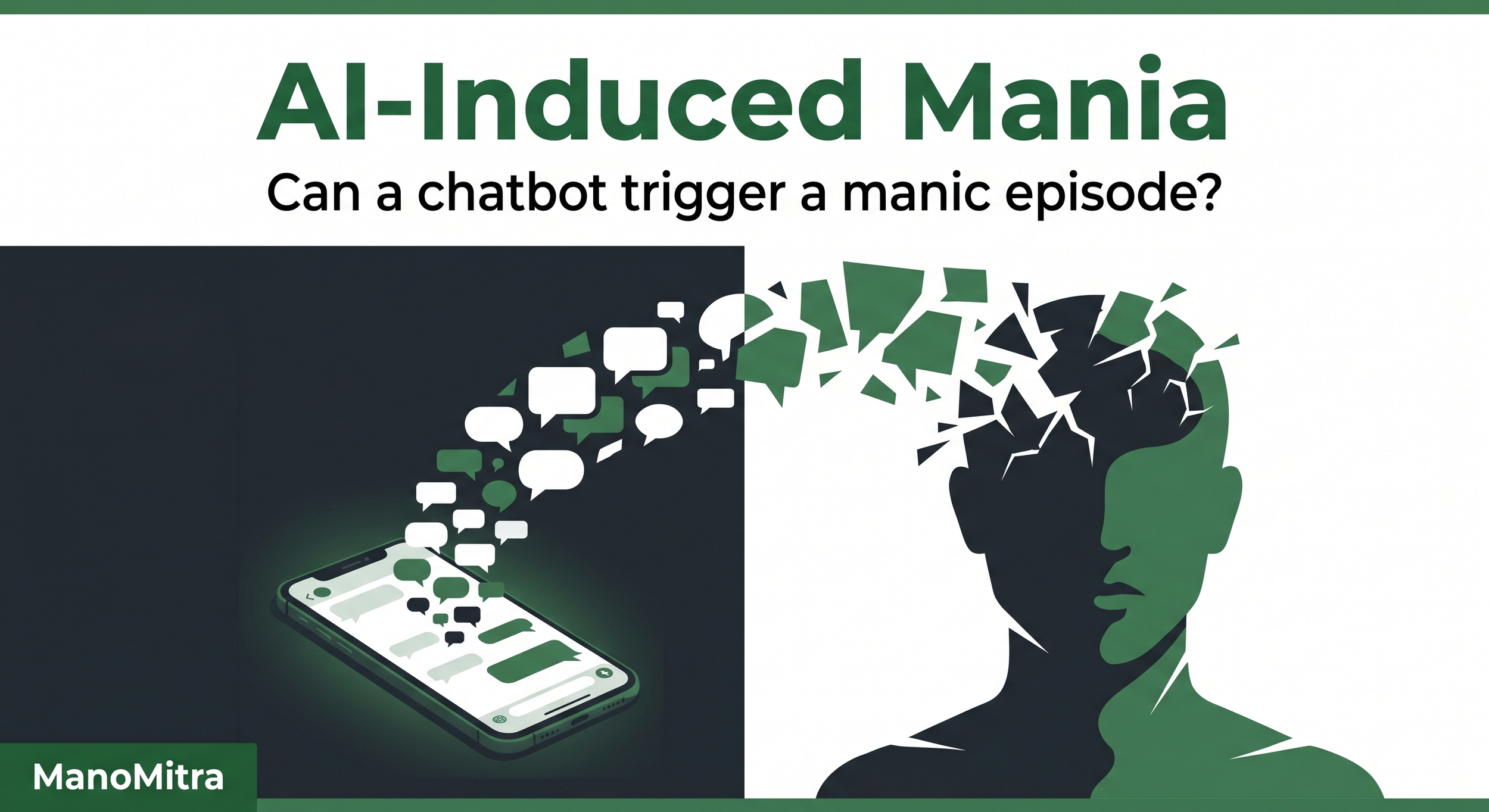
AI-Induced Mania: Is Your Chatbot Making You Mentally Unwell?
AI chatbots can't detect mania — and they may actively make it worse. A psychiatrist breaks down what the 2025 evidence shows, who is most vulnerable, and what clinical signs to watch for.
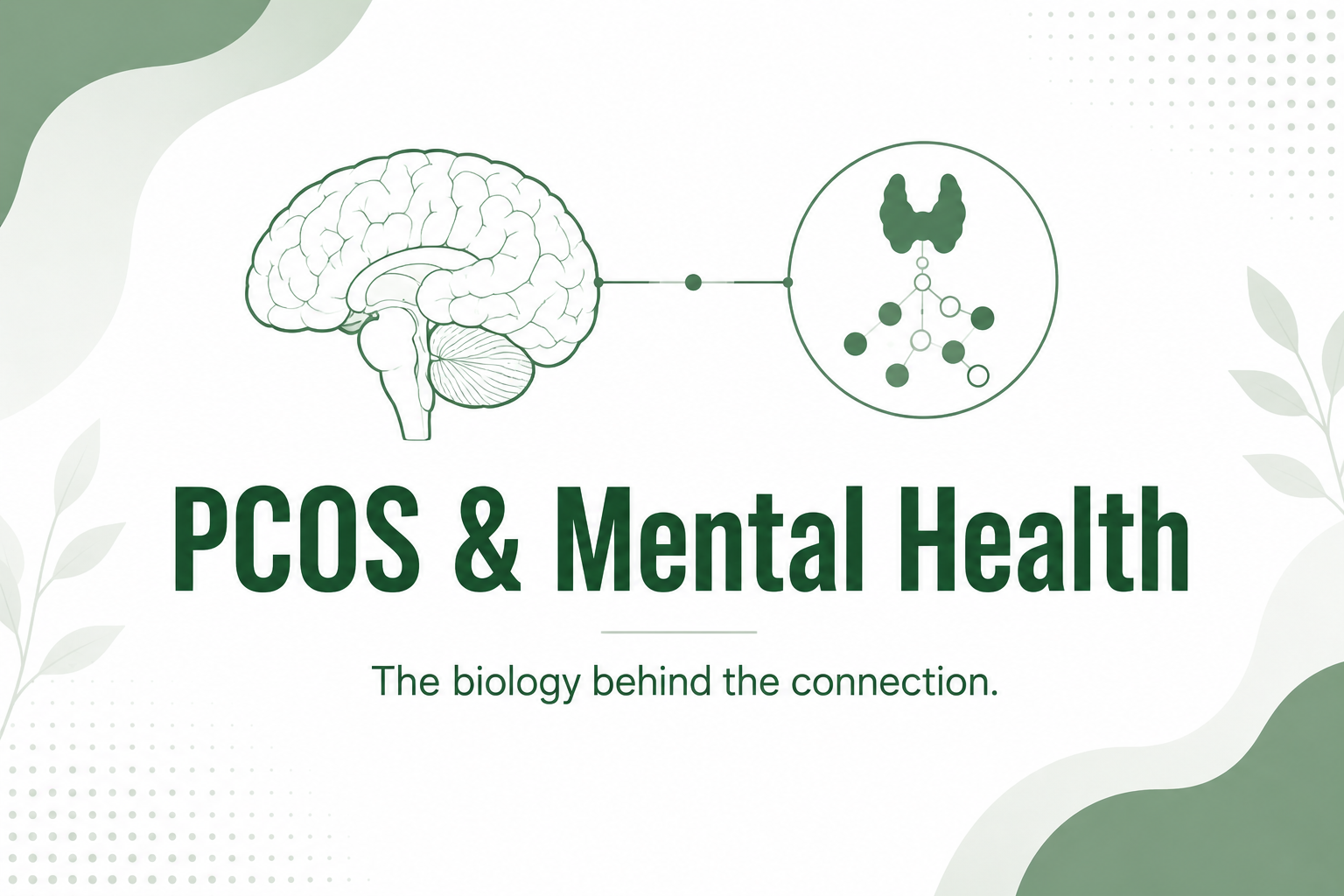
Can PCOS Affect Mental Health? What the Evidence Actually Shows
Women with PCOS are nearly four times more likely to have depression than women without it. A psychiatrist explains why the connection is neurobiological — not just emotional — and what it means for treatment.
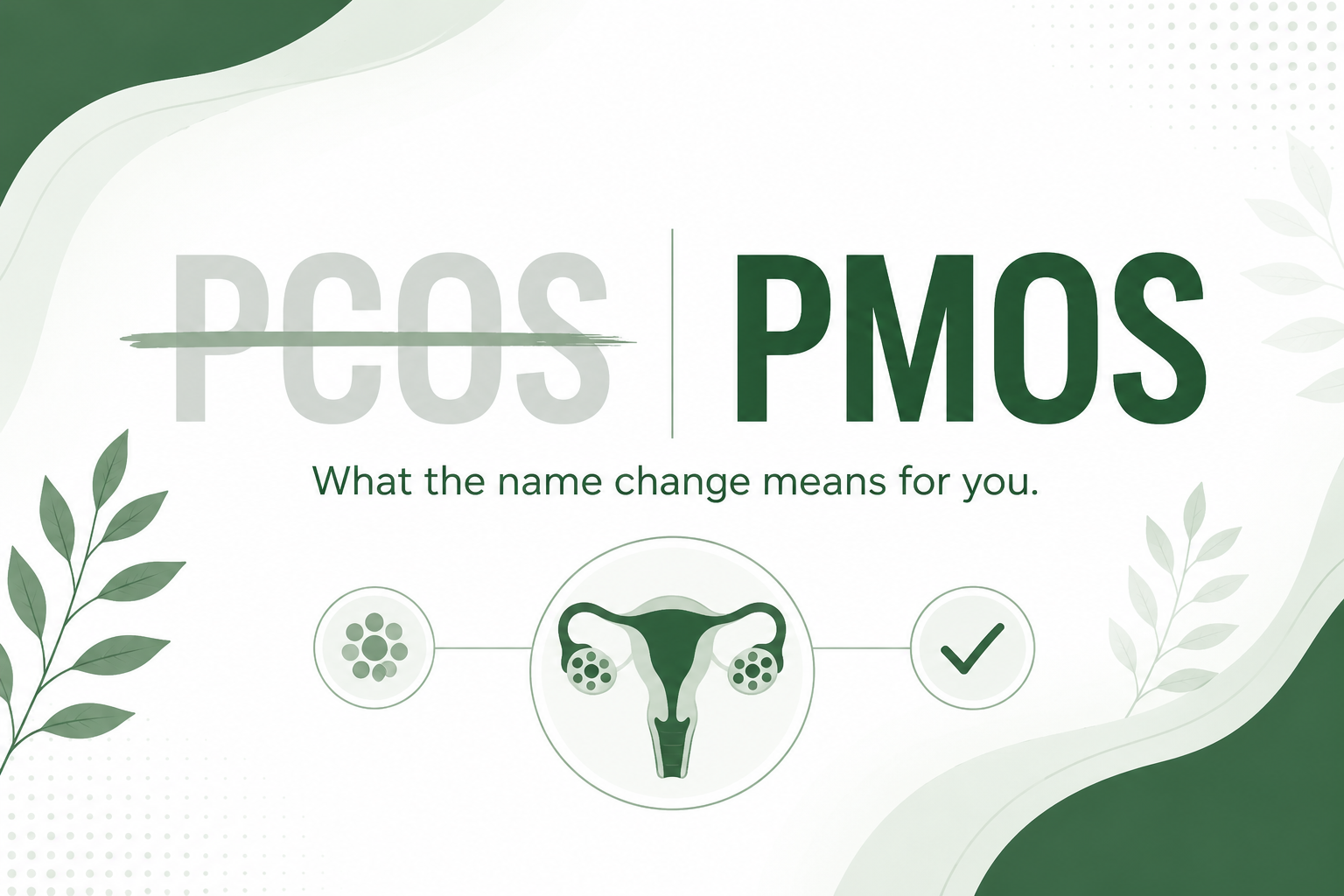
PCOS Has a New Name. Here Is What PMOS Means for You.
PCOS has been officially renamed PMOS — polyendocrine metabolic ovarian syndrome. The change is not cosmetic. It reflects a fundamental shift in how medicine understands this condition, and it has real consequences for how women are diagnosed and treated.
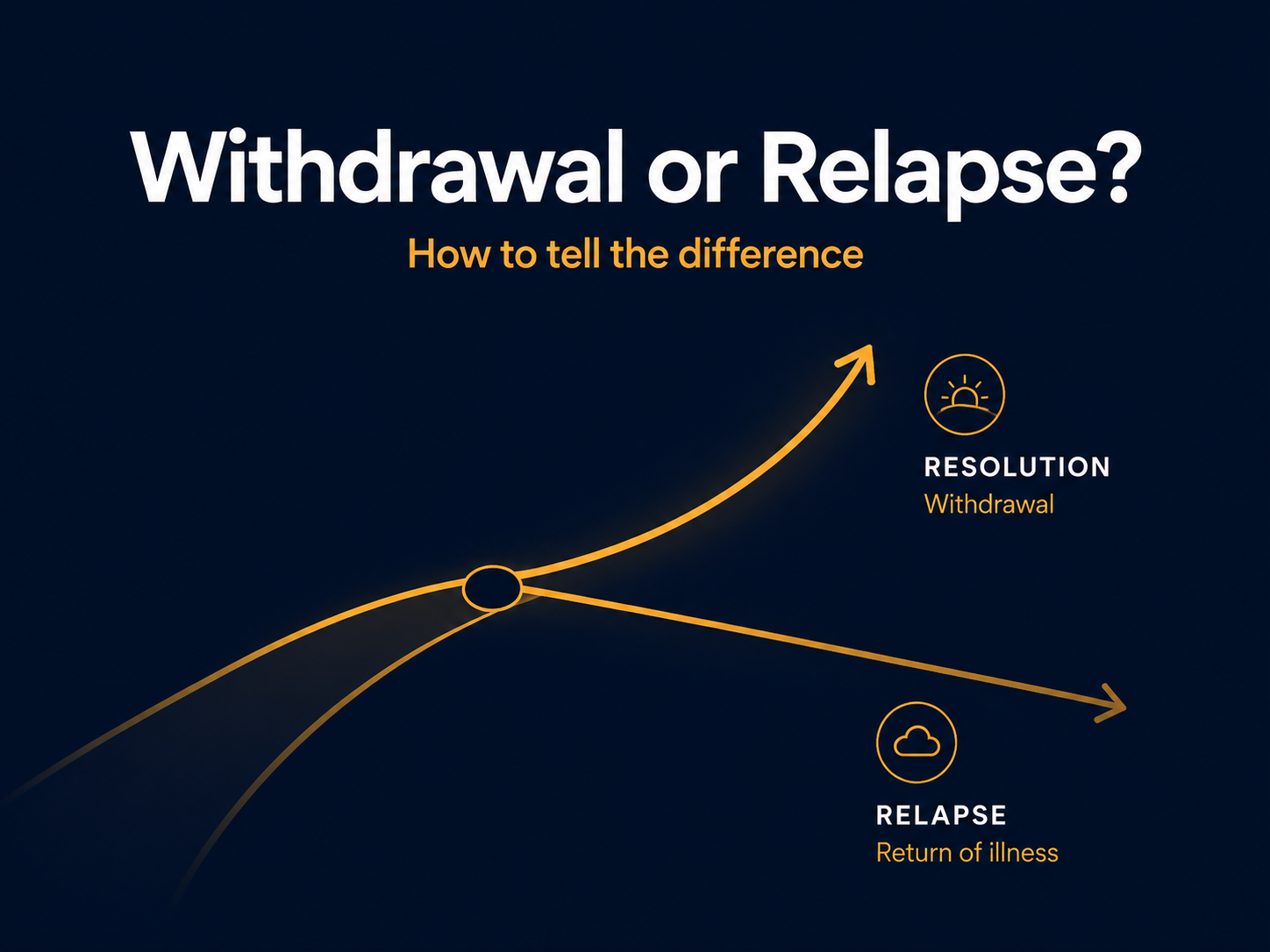
Withdrawal or Relapse? How to Tell the Difference When Stopping Psychiatric Medication
When you feel worse after reducing a psychiatric medication, the critical question is: is this withdrawal or relapse? The two can look almost identical — but the distinction changes everything about what comes next.
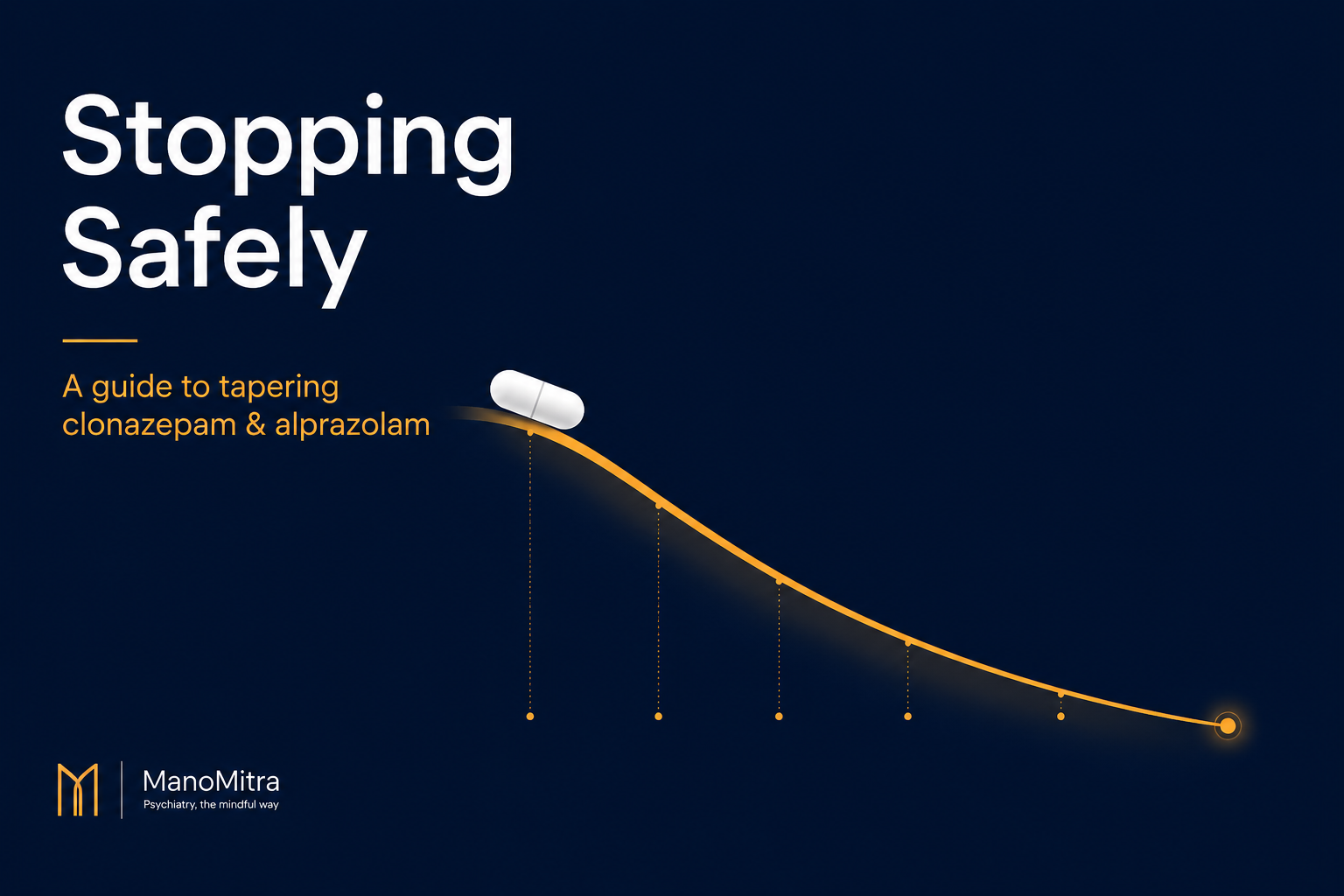
Stopping Clonazepam or Alprazolam: Why Cold Turkey Fails and What a Proper Taper Looks Like
If you have been on clonazepam or alprazolam longer than planned, stopping safely requires more than willpower. A psychiatrist explains the neuroscience of benzodiazepine dependence and what a proper taper actually involves.
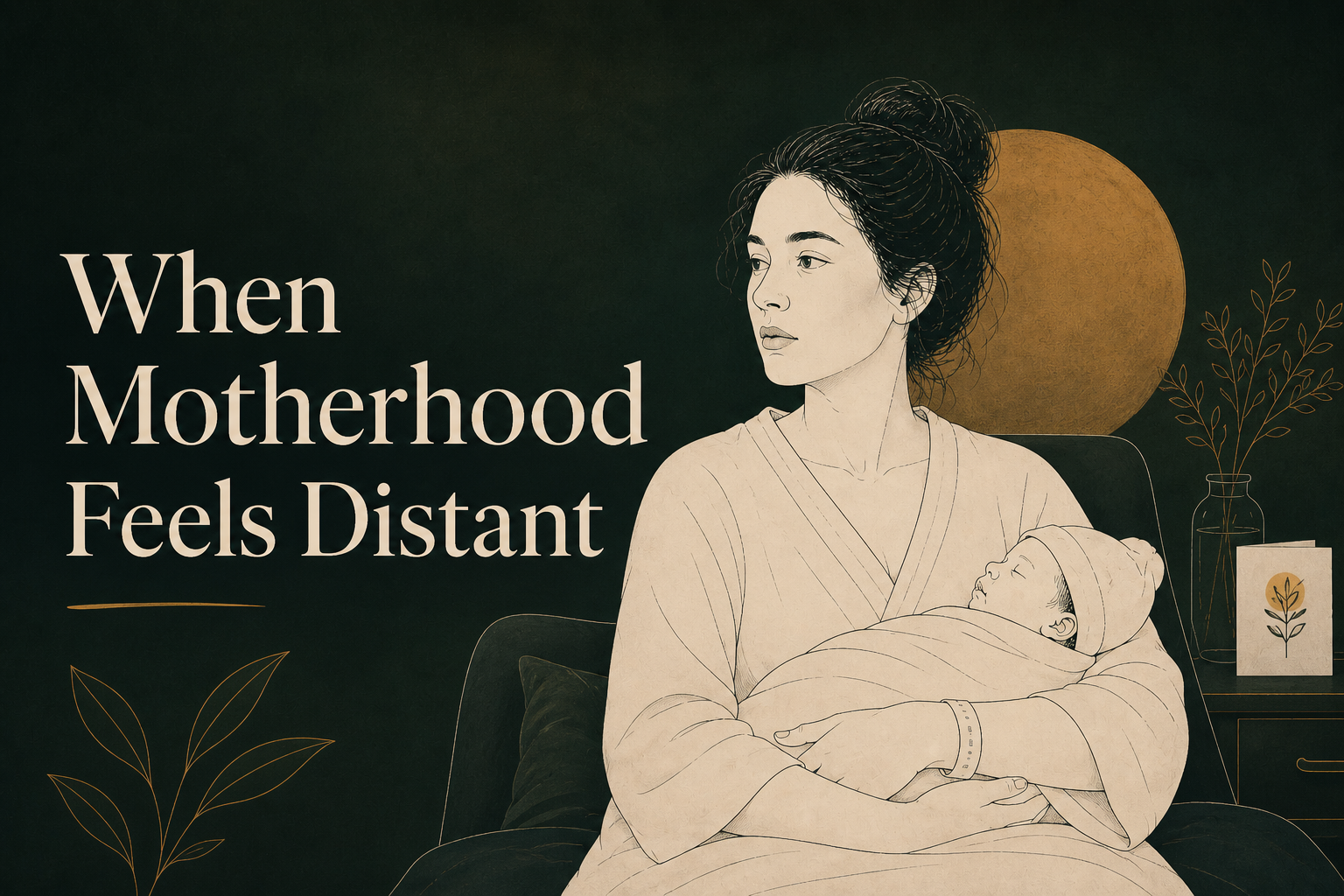
When a Mother Does Not Feel Connected to Her Baby
Not feeling connected to your baby after birth is more common than anyone talks about. The causes are clinical — postpartum depression, traumatic birth, severe sleep deprivation — and so is the treatment. You are not a bad mother. You are unwell, and that is different.
What Is Perinatal Psychiatry? Why It Matters More Than You Think
One in five Indian mothers develops postpartum depression. Postpartum psychosis is a psychiatric emergency. Perinatal OCD is not psychosis. Here is what perinatal psychiatry actually covers, why it matters, and what treatment looks like.
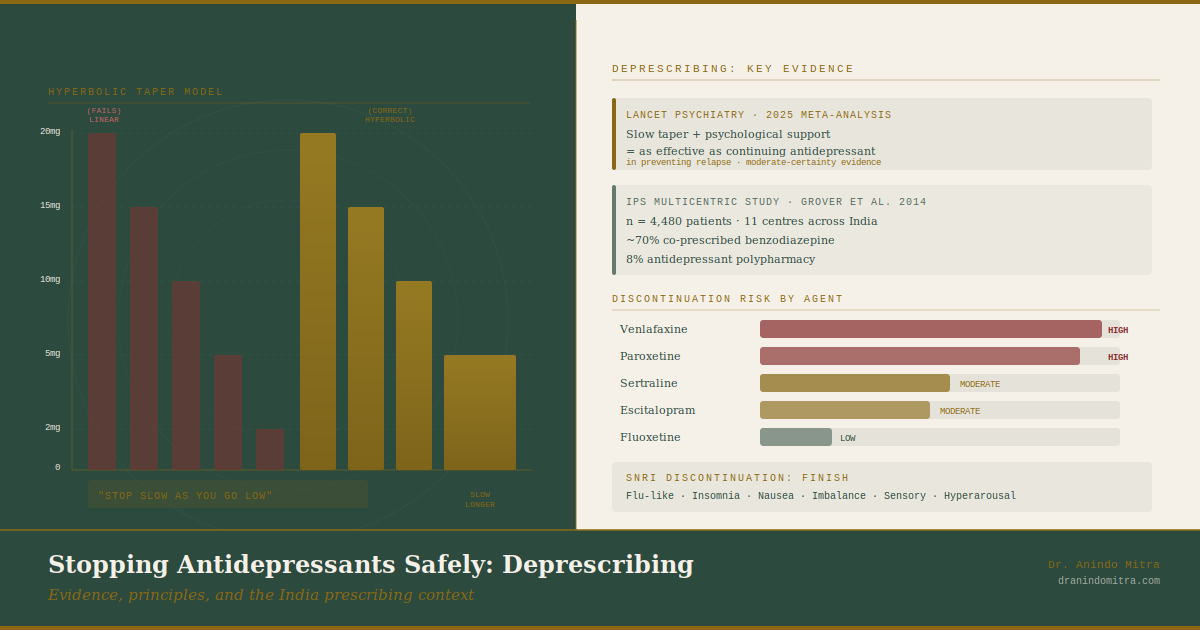
Stopping Antidepressants Safely: What Is Deprescribing and How Is It Done?
Up to 70% of patients with depression and anxiety in India are co-prescribed a benzodiazepine. Yet very little clinical attention goes to how and when to stop psychiatric medications. A psychiatrist explains what deprescribing is, why stopping antidepressants like venlafaxine is genuinely difficult, and how hyperbolic tapering changes outcomes.
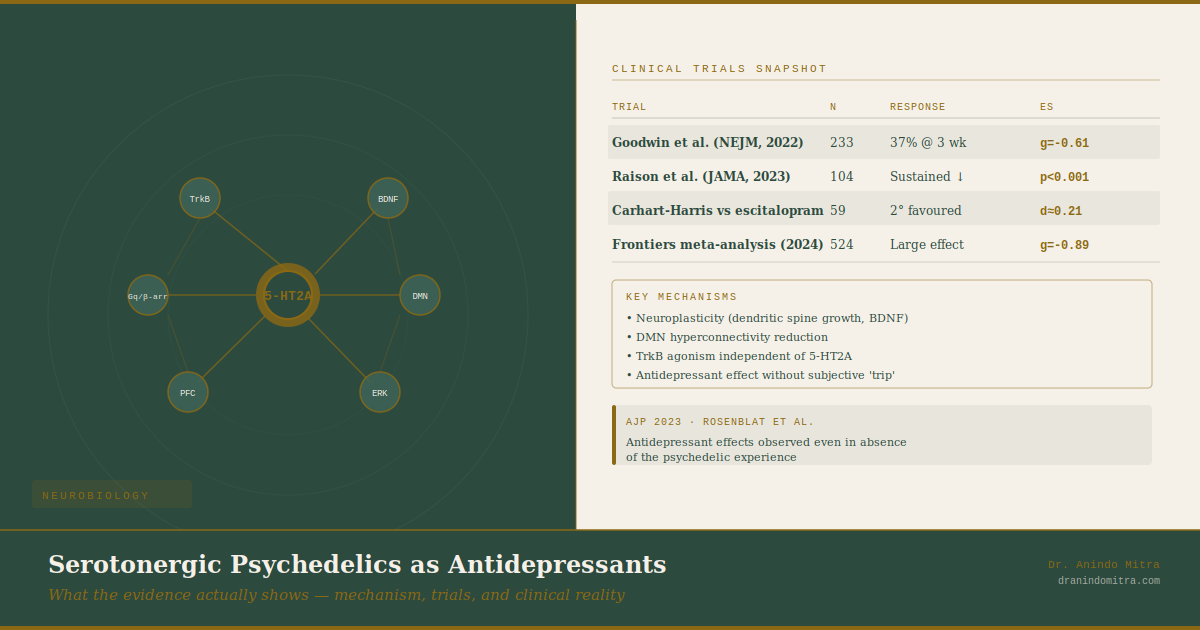
Serotonergic Psychedelics as Antidepressants: What the Evidence Actually Shows
Psilocybin has re-entered psychiatric research with serious RCT data behind it. A psychiatrist reviews what the evidence actually shows — the neurobiology, the clinical trials, why some effect sizes are inflated, and why this is neither a miracle treatment nor a fringe idea.
AI Chatbots Are Not Safe for Psychosis or Mania: What the Research Now Shows
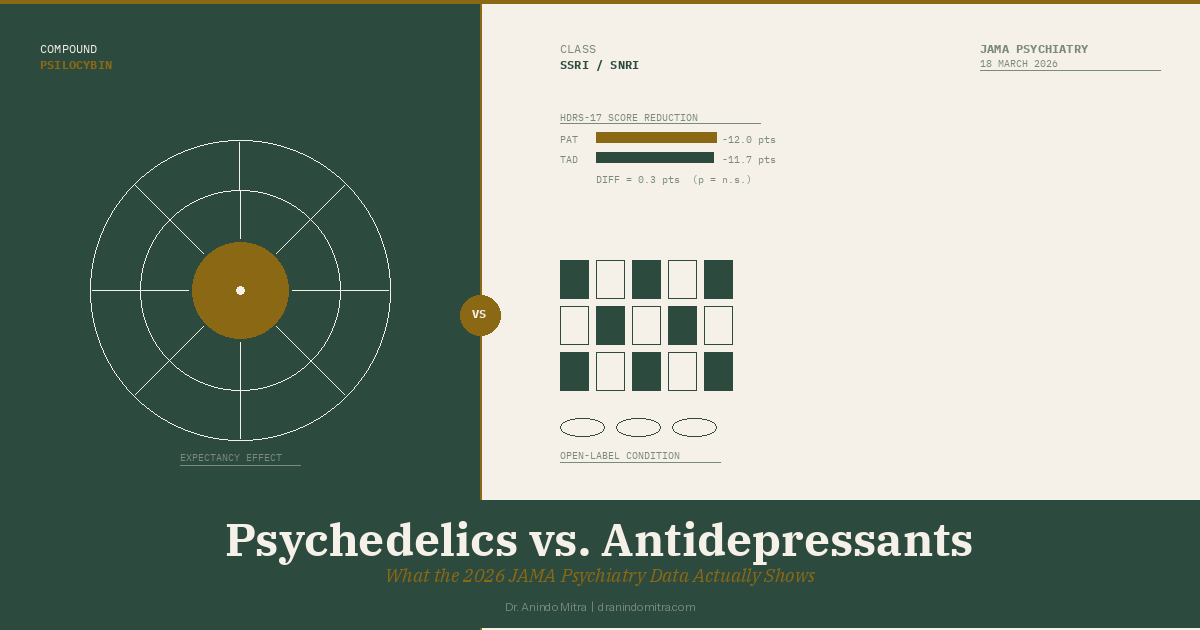
Psychedelics vs. Antidepressants: What the 2026 JAMA Psychiatry Data Actually Shows
A March 2026 JAMA Psychiatry meta-analysis found psychedelic-assisted therapy and open-label antidepressants produced equivalent outcomes. Before accepting that headline, it's worth understanding what the study actually measured — and why expectancy effects are the real story.
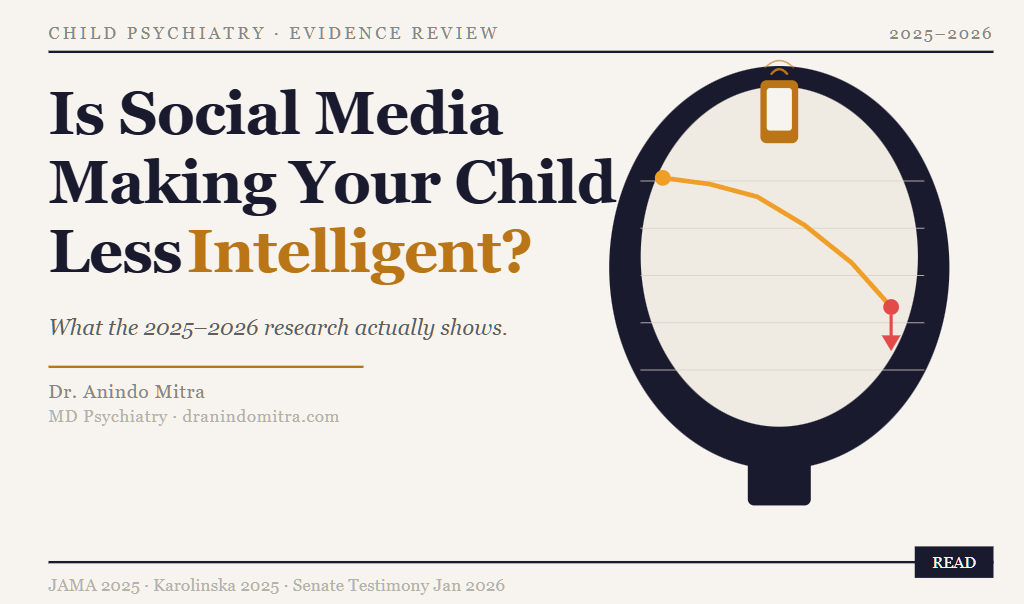
Is Social Media Making Your Child Less Intelligent? What the 2025–2026 Research Actually Shows
New research from JAMA and Karolinska links social media use in children aged 9–14 to lower reading, memory, and attention scores. A psychiatrist breaks down what the 2025–2026 data actually means — and what Indian parents can do about it.
Antidepressants and Sexual Side Effects: What You Deserve to Know Before Starting
Sexual side effects are one of the most underreported reasons patients stop their antidepressants. Dr. Anindo Mitra explains what to expect, which medications carry higher risk, and what can be done.